Showing posts with label Biodiversity. Show all posts
Showing posts with label Biodiversity. Show all posts
Tuesday, May 31, 2011


Monday, February 21, 2011
Tropical forests 're-shaped' by climate changes
Future climate change could change the profile of tropical forests, with possible consequences for carbon storage and biodiversity, a study says.It suggests that if current trends continued, the drier conditions would favour deciduous, canopy species at the expense of other trees.
read here
Friday, February 18, 2011
Global Warming May Reroute Evolution
Rising carbon dioxide levels associated with global warming may affect interactions between plants and the insects that eat them, altering the course of plant evolution, research at the University of Michigan suggests.
read here
Thursday, January 20, 2011
Are Sharks Color Blind?

Sharks are unable to distinguish colors, even though their close relatives rays and chimaeras have some color vision, according to new research by Dr. Nathan Scott Hart and colleagues from the University of Western Australia and the University of Queensland in Australia.Their study shows that although the eyes of sharks function over a wide range of light levels, they only have a single long-wavelength-sensitive cone* type in the retina and therefore are potentially totally color blind. Hart and team's findings are published online in Springer's journalNaturwissenschaften.
read here
Friday, January 14, 2011
New Predator 'Dawn Runner' Discovered in Early Dinosaur Graveyard

A team of paleontologists and geologists from Argentina and the United States on Jan. 13 announced the discovery of a lanky dinosaur that roamed South America in search of prey as the age of dinosaurs began, approximately 230 million years ago.
read here
Friday, December 31, 2010
Growing Atlantic dead zone shrinks habitat for Species
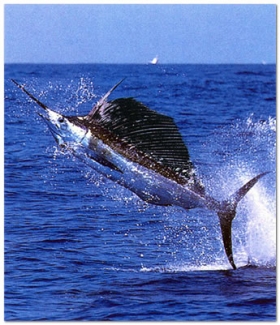
A dead zone off the coast of West Africa is reducing the amount of available habitat for Atlantic tuna and billfish species, reports the National Oceanic and Atmospheric Administration in a study published in Fisheries Oceanography. The zone is growing due to rising water temperatures and is expected to cause over-harvest of tuna and billfish as the fish seek higher levels of oxygen in areas with greater fisheries activity.
read here
Wednesday, December 29, 2010
Environmental Limit Species Diversity
New research on lizards in the Caribbean demonstrates that species diversification is limited by the environment. The finding supports and extends the MacArthur-Wilson theory of island biogeography.
Friday, November 26, 2010
Size of Mammals Exploded After Dinosaur Extinction

Researchers have demonstrated that the extinction of dinosaurs 65 million years ago paved the way for mammals to get bigger -- about a thousand times bigger than they had been. The study titled, "The Evolution of Maximum Body Size of Terrestrial Mammals," released in the journal Science, is the first to quantitatively explore the patterns of body size of mammals after the demise of the dinosaurs.
Sunday, October 31, 2010
Can Carbon Dioxide Be A Good Thing?
Too much carbon dioxide can be a bad thing, but sometimes it can have a positive effect on plants and trees. The more carbon emissions we dump into the air, the faster forests and plants grow.This new revelation is the result of research done by the North American carbon program.
Scott Denning, Ph.D., a physicist from Colorado State University in Fort Collins, Colorado, explains the North American Carbon Program, "We are measuring CO2 in the atmosphere at dozens of places every hour around the United States and Canada."
read here
Friday, October 29, 2010
One-horned rhino killed in Kaziranga park
An endangered one-horned rhino was killed and its horn gouged out by poacher gangs at the famed Kaziranga National Park in Assam, India.
read here
read here
India will facilitate global plan to save animals and plants
The Oct 18-29 UN biodiversity summit appointed India as one of the facilitators in an attempt to reach a global deal that aims to halt the loss of plants, animals and their habitats by 2020.
The summit of 192 countries and the European Union (EU) here has been stuck over three points - what percentage of the earth’s land and seas should be set aside for conservation; how much should rich countries pay poor countries for this; how much should pharmaceutical and cosmetics firms pay when they use the traditional knowledge of medicinal plants. The third point is about the debate known as access and benefit sharing (ABS).
read here
Monday, October 25, 2010
New Carbon Maps to curb climate change and boost biodiversity
New Country Maps Pinpoint Places Where Investments in Carbon Can Contribute to Community Livelihoods and Wider Conservation Goals..
read here
Saturday, October 9, 2010
Haze on Saturn's Moon Titan May Hold Ingredients for Life

In an experiment exploring the chemical processes that might be going on in the hazy atmosphere enshrouding Saturn's largest moon, a University of Arizona-led team of scientists discovered a variety of complex organic molecules -- including amino acids and nucleotide bases, the most important ingredients of life on Earth.
Tuesday, October 5, 2010
Powerful Supercomputer Peers Into the Origin of Life

Supercomputer simulations at the Department of Energy's Oak Ridge National Laboratory are helping scientists unravel how nucleic acids could have contributed to the origins of life.
read here
Sunday, October 3, 2010
Genetically Altered Trees, Plants Help Counter Global Warming

Forests of genetically altered trees and other plants could sequester several billion tons of carbon from the atmosphere each year and so help ameliorate global warming, according to estimates published in the October issue of BioScience. The study, by researchers at Lawrence Berkeley National Laboratory and Oak Ridge National Laboratory, outlines a variety of strategies for augmenting the processes that plants use to sequester carbon dioxide from the air and convert it into long-lived forms of carbon, first in vegetation and ultimately in soil.
read here
Wednesday, September 29, 2010
Extinction threat to one fifth of world's plants
More than a fifth of the world's plant species faces the threat of extinction, a trend with potentially catastrophic effects for life on Earth, according to research released on Wednesday.
read here
Sunday, September 19, 2010
3-MILLION-YEAR-OLD WHALE AT THE SAN DIEGO ZOO

Workmen constructing a storm water equalization tank this week at the San Diego Zoo dug up a surprising find: a 3-million-year-old whale.
The construction crew was using an excavotor to dig through fine grain sand, when suddenly the machine struck a solid item. Further investigation revealed that this obstacle was an enormous prehistoric whale.The 24-foot baleen whale appears to be very well preserved, with much of the fossilized skeleton present. Finding an intact skull, along with the vertebrae and flippers, is quite rare, according to Sarah Siren, San Diego Natural History Museum paleontological field manager.
read here
Tuesday, July 6, 2010
Dinosaurs Nestled Up to Geysers, Hot Springs to Incubate Eggs

In the Cretaceous period over a hundred million years ago, Argentina's Sanagasta Valley was alive with hydrothermal activity, much like Yellowstone National Park or Iceland are today. Tunnels of near-boiling, mineral-rich water crisscrossed the subsurface , and explosive geysers pockmarked the landscape. Doesn't seem like a very inviting place to raise a family.
But researchers found some 80 clutches of fossilized eggs in the area, many of them containing a dozen or more eggs each. Even more strange, the nests were almost exclusively found within 10 feet of a geyser or hot spring. It seems that far from avoiding the hydrothermal features, dinosaurs were purposefully laying eggs near them as a way to keep them incubated during their 1-2 month long gestation.
But researchers found some 80 clutches of fossilized eggs in the area, many of them containing a dozen or more eggs each. Even more strange, the nests were almost exclusively found within 10 feet of a geyser or hot spring. It seems that far from avoiding the hydrothermal features, dinosaurs were purposefully laying eggs near them as a way to keep them incubated during their 1-2 month long gestation.
Gerald Grellet-Tinner of the Field Museum in Chicago and Lucas Fiorelli of CRILAR in Argentina published their findings in the journal Nature Communications.
read here
Thursday, July 1, 2010
Tuesday, February 23, 2010
Tiny Dinosaurs
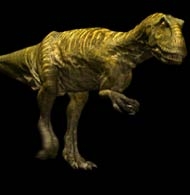
Insular dwarfism is the process and condition of the reduction in size of large animals — typically mammals but also dinosaurs — when their population's gene pool is limited to a very small environment, primarily islands. This natural process is distinct from the intentional creation of dwarf breeds, called dwarfing.
There is also an inverse process, island gigantism, wherein small animals breeding on isolated islands lacking the predators of large land masses may become much larger than normal. An excellent example is the dodo, the ancestors of which were normal sized pigeons. There are also several species of giant rats, some extinct and some still extant.
read here
Subscribe to:
Posts (Atom)