Saturday, August 13, 2011

Don't rebuild communities in landslide-stricken areas

This advice comes from Dr. Beatriz Cuevas-Jadina of the Visayas State University (VSU) in Baybay City, Leyte, who has been studying high-risk landslide areas in Leyte.
read here

Friday, August 12, 2011

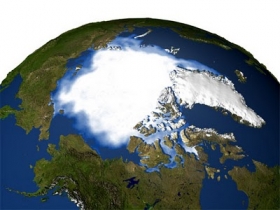
Arctic Ocean will have an ice-free summer byr 2100

The United Nations Intergovernmental Panel on Climate Change (IPCC) had released its most recent report in 2007. It forecasts that the Arctic Ocean will have an ice-free summer by the year 2100. However, that finding has been contradicted by researchers at the Massachusetts Institute of Technology (MIT). They say the Arctic summer will be ice-free several decades earlier, within many people’s lifetimes.
read here

Sunday, August 7, 2011

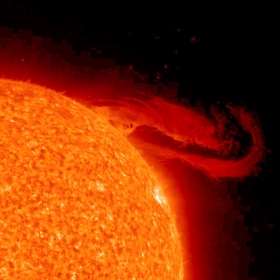
Solar storms to hit Earth

Three large explosions from the Sun over the past few days have prompted U.S. government scientists to caution users of satellite, telecommunications and electric equipment to prepare for possible disruptions over the next few days.
read here

Tuesday, August 2, 2011

Sugar Doesn't Melt -- It Decomposes, Scientists Demonstrate

Flying in the face of years of scientific belief, University of Illinois researchers have demonstrated that sugar doesn't melt, it decomposes.
read here

Wednesday, July 20, 2011

Mount Rainier Has Lost One-Seventh of Its Ice and Snow

About 14% of the ice and permanent snow atop Washington's Mount Rainier melted in the last 4 decades, a new study suggests. Researchers arrived at that figure by comparing the estimated thicknesses and extents of ice seen in a 1970 aerial survey with those measured by an airborne laser altimeter in 2007 and 2008. All but two of the 28 glaciers and snowfields have thinned and shortened at their lower edges, and the exceptions likely thickened only because large amounts of rock fell upon the ice in recent years and insulated it from warming temperatures. Overall, the volcanic peak lost about 0.65 cubic kilometers of ice—enough to cover the entire state of Rhode Island to a depth of 20 centimeters—during the 38-year interval between surveys, the researchers report online inGeology. Prior to the ongoing meltback, Mount Rainier's ice and snow coverage expanded from the late 1950s to around 1980 during a wetter-than-normal phase of a multi-decadal climate cycle called the Pacific Decadal Oscillation. These recent trends indicate that Mount Rainier's glaciers are very sensitive to warming and could grow again with modest changes in temperature or precipitation, the scientists say.
source:Science Shots

Friday, July 1, 2011

Your iPhone and Macbook can Detect Earthquakes!

Launch the Safari browser on your iOS device, or Google Chrome if you using a Macbook, and then open this page - isthisanearthquake.com. Now shake your phone /computer and the website will capture these movements in real-time much like a seismograph.
read more

A young, wayward Emperor penguin won't be getting a free ride back to Antarctica

An Emperor penguin found in New Zealand will be released into the ocean when fully fit so it can swim the 1,900 miles home to Antarctica, wildlife experts said.  The penguin, nicknamed "Happy Feet," was found wandering on a beach near Wellington last week and was taken to the city's zoo when it became sick after eating sand and sticks.
read here 

Monday, June 20, 2011

Glimpsing the End of Our Solar System

 Researchers at the University of Leicester are investigating the possible eventual fate of the solar system by examining 'white dwarf' stars elsewhere in our galaxy.
read here