Tuesday, August 31, 2010

Natural Laboratory in the Mediterranean Sea is revealing the effects of rising carbon dioxide levels on life in the ocens

A unique 'natural laboratory' in the Mediterranean Sea is revealing the effects of rising carbon dioxide levels on life in the oceans. The results show a bleak future for marine life as ocean acidity rises, and suggest that similar lowering of ocean pH levels may have been responsible for massive extinctions in the past.
read here

Monday, August 30, 2010

El Niños Are Growing Stronger, NASA/NOAA Study Finds

A relatively new type of El Niño, which has its warmest waters in the central-equatorial Pacific Ocean, rather than in the eastern-equatorial Pacific, is becoming more common and progressively stronger, according to a new study by NASA and NOAA. The research may improve our understanding of the relationship between El Niños and climate change, and has potentially significant implications for long-term weather forecasting.
read here 

Sunday, August 29, 2010

And Now Electricity from Lightning


A group of chemists from the University of Campinas in Brazil presented research on Wednesday claiming they've figured out how electricity is formed and released in the atmosphere.

Based on this knowledge, the team said it believes a device could be developed for extracting electrical charges from the atmosphere and using it for electricity.

The team, led by Fernando Galembeck, says they discovered the process by simulating water vapor reactions in a laboratory with dust particles common to the atmosphere.
read here

New Online Tool Monitors Endangered Species Trading

A new interactive tool that enables users to view trade data about wildlife and plants in 175 countries is now offered online by the Convention on International Trade in Endangered Species, CITES, to mark its 35th anniversary.
read here

Friday, August 27, 2010

Planetary Scientists To Find Out Composition, Structure Of Asteroids

A NASA mission to two asteroids, one formed of lava and the other potentially containing water, will help find clues about the formation of our solar system...
read here

Carbon menace? Indian man's device to help the world go green

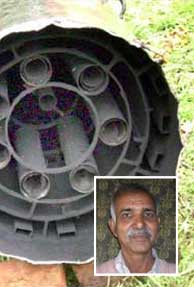
Virendra Kumar Sinha, who runs a workshop in East Champaran in Bihar, was ignorant about the possibilities of his pollution control device that can be attached to generators or other diesel engines to reduce noise and air pollution. With emissions of carbon dioxide forecasted to touch 43 percent by 2035, Virendra's device could go a long way in making a big difference in the world, which requires a cleaner and greener environment.
full story

Monday, August 23, 2010

Ancient Galaxy Cluster Still Producing Stars

In ongoing observations of one of the universe's earliest, most distant cluster of galaxies using NASA's Spitzer Space Telescope, an international team of researchers led by Texas A&M's Dr. Kim-Vy Tran has discovered that a significant fraction of those ancient galaxies are still actively forming stars.
read here