Monday, May 31, 2010

Fault Types


A fault is a large crack in the Earth's crust where one part of the crust has moved against another part. This movement means that faults prove the Earth is an active place. They are signs of powerful forces deep underground.

The parts of a fault are (1) the fault plane, (2) the fault trace, (3) the hanging wall and (4) the footwall. The fault plane is is a flat surface that may be vertical or sloping. The line it makes on the Earth's surface is the fault trace. Where the fault plane is sloping, the upper side is the hanging wall and the lower side is the footwall. When the fault plane is vertical, there is no hanging wall or footwall. 

Any fault plane can be completely described with two measurements: its strike and its dip. The strike is the direction of the fault trace on the Earth's surface. The dip is the measurement of how steeply the fault plane slopes—if you dropped a marble on the fault plane, it would roll exactly down the direction of dip.


U.S. Geological Survey image
It's important to know a fault's type: normal, reverse or strike-slip. The type reflects the kind of forces that are acting on the fault.

Normal faults form when the hanging wall drops down. The forces that create normal faults are pulling the sides apart, or extensional.

Reverse faults form when the hanging wall moves up. The forces creating reverse faults are compressional, pushing the sides together.

Together, normal and reverse faults are called dip-slip faults, because the movement on them occurs along the dip direction—either down or up, respectively.

Strike-slip faults have walls that move sideways, not up or down. That is, the slip occurs along the strike, not up or down the dip. In these faults the fault plane is usually vertical, so there is no hanging wall or footwall. The forces creating these faults are lateral or horizontal, carrying the sides past each other.

Strike-slip faults are either right-lateral or left-lateral. That means someone standing near the fault trace and looking across it would see the far side move to the right or to the left, respectively. The one in the picture is left-lateral.

In reality, many faults show a combination of dip-slip and strike-slip motion. Geologists use more sophisticated measurements to analyze these fault movements. The Natural Fractures site has a page with more rigorous detail on these.

You can judge a fault's type from looking at the focal mechanism diagrams of earthquakes that occur on it—those are the "beachball" symbols you'll often see on earthquake sites.

SOFIA Sees Jupiter's Ancient Heat

The Stratospheric Observatory for Infrared Astronomy, or SOFIA, took off for its maiden flight during the early hours of Wednesday morning and the "first light" images of the observations taken during the flight are available.

Already, the flying telescope has spotted something that has never been seen before: ancient heat leaking through the clouds of Jupiter.
full story

Mitigating the Effects of El Niño

read here

"Top Kill" Fails

click here

Friday, May 28, 2010

Electric Ash Found in Eyjafjallajokull's Plume, Say UK Researchers

 In the first peer-reviewed scientific paper to be published about the Icelandic volcano since its eruption in April 2010, UK researchers write that the ash plume which hovered over Scotland carried a significant and self-renewing electric charge.
read here 

Tuesday, May 25, 2010

China to put up its own GPS by 2012

Challenging US monopoly on global positioning systems (GPS), China is set to establish its own satellite navigation system by 2012, covering the Asia-Pacific region. China will become the third country, after US and Russia (it's system is under restoration), to have its own 'sat nav', a Chinese scientist has announced. Sun Jiadong, chief designer of the Beidou Navigation System, indicated China was ready to spend several billion dollars to put up a network of 30 new satellites in the sky. The local government was looking for markets to sell navigational services in order to finance the project, he said.

Monday, May 24, 2010

Delhi's hi-tech pollution control drive begins

In a bid to make the city's air cleaner before the Commonwealth Games, the Delhi government will launch a special drive  against polluting commercial and private vehicles using latest technology.
read here 

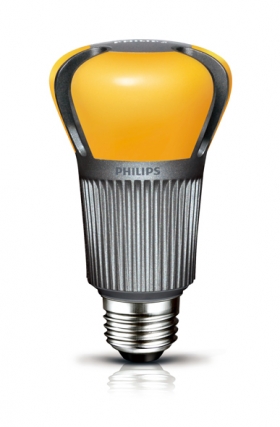
Philips Unveils World's First 60 Watt LED Bulb

At the Lightfair International tradeshow in Las Vegas, Royal Philips Electronics unveiled its breakthrough EnduraLED light bulb. This bulb will be the world's first LED replacement for the 60 watt incandescent light bulb, which represents about half of all domestic incandescent light bulbs sold on the market.The EnduraLED lamp will use only 12 watts, last 25 times longer, and deliver up to eighty percent savings on energy costs and avoided maintenance costs. However, the new bulb will produce a light level of 806 lumens, similar to the 60 watt incandescent. To achieve this efficiency, it uses an innovative design and a new technology known as remote phosphor technology, developed by Philips researchers in The Netherlands.