click here
Saturday, December 22, 2012


Friday, November 16, 2012
Sandy Changed US Coast

The USGS has released a series of aerial photographs showing before-and-after images of Hurricane Sandy's impacts on the Atlantic Coast. Among the latest photo pairs to be published are images showing the extent of coastal change in North Carolina, Virginia, Maryland, and Delaware. The photos, part of a USGS assessment of coastal change from as far south as the Outer Banks of North Carolina to as far north as Massachusetts, show that the storm caused dramatic changes to portions of shoreline extending hundreds of miles. Pre- and post-storm images of the New Jersey and New York shoreline in particular tell a story of a coastal landscape that was considerably altered by the historic storm.
read hereThursday, November 15, 2012
Climate-Related Migration
Recent reports, as well as extreme weather events such as Superstorm Sandy, suggest that climatechange, and particularly sea-level rise, may be occurring faster than earlier anticipated. This has increased public and policy discussions about climate change’s likely impacts on the movement of populations, both internally and worldwide. Research suggests that when climate-related migration does occur, much of it is short distance and within national borders, as opposed to international, according to new analysis conducted by Lori Hunter, Associate Professor of Sociology at the University of Colorado at Boulder, for the Worldwatch Institute’s Vital Signs Online service
read hereGreenhouse Gas Emissions Delaying the Ice Age
Mankind's emissions of fossil carbon and the resulting increase in temperature could prove to be our salvation from the next ice age.
click here
Wednesday, November 14, 2012
Monday, November 12, 2012
Saturday, October 27, 2012
Researchers Emphasize the Need to Monitor Rivers for Triclosan
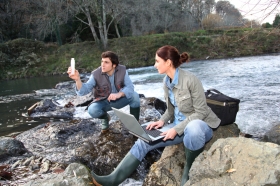
As an antibacterial and antifungal agent, Triclosan is used in everything from toothpaste, to soaps, socks and trash bags. While the US Food and Drug Administration, the Environmental Protection Agency, and the European Union all regulate triclosan, the chemical is not monitored and often gets absorbed into sewage sludge after wastewater treatment.Researchers from Germany and Slovakia are claiming that triclosan is harmful to the ecology of rivers and are calling for further monitoring of the chemical. After monitoring the Elbe river basin, concentrations of the chemical at various test sites were found to exceed the predicted no-effect concentration for algal communities. From the 500 river basin-specific pollutants investigated, triclosan ranked sixth as one of the most particularly harmful substances in Europe. According to an article published in the journal Environmental Science Pollution Research, scientists want to emphasize the importance for routine monitoring programs at the European scale.
read here
Subscribe to:
Posts (Atom)