Thursday, December 23, 2010

Component in Common Dairy Foods May Cut Diabetes Risk

Scientists at the Harvard School of Public Health (HSPH) and collaborators from other institutions have identified a natural substance in dairy fat that may substantially reduce the risk of type 2 diabetes. The compound, trans-palmitoleic acid, is a fatty acid found in milk, cheese, yogurt, and butter. It is not produced by the body and so only comes from the diet.
read here 

Tuesday, December 21, 2010

Three Billion-Year-Old Genomic Fossils Deciphered

About 580 million years ago, life on Earth began a rapid period of change called the Cambrian Explosion, a period defined by the birth of new life forms over many millions of years that ultimately helped bring about the modern diversity of animals. Fossils help palaeontologists chronicle the evolution of life since then, but drawing a picture of life during the 3 billion years that preceded the Cambrian Period is challenging, because the soft-bodied Precambrian cells rarely left fossil imprints. However, those early life forms did leave behind one abundant microscopic fossil: DNA.
read here

Sunday, December 19, 2010

Sweden permits new wolf hunt despite criticism

The Swedish Environmental Protection Agency said that between January 15 and February 15 licensed hunters will be permitted to shoot 20 wolves, down from the quota of 27 animals this year.
The Swedish parliament decided last year to limit the wolf population to 210 animals, spread out in 20 packs, with 20 new pups per year, for a period of five years by issuing hunting permits in regions where wolves have recently reproduced.
read here 

Cyclone Lasting More Than Five Years Is Detected on Saturn

Researchers from the University of the Basque Country (UPV/EHU) have been monitoring a cyclone on Saturn for more than five years. This makes it the longest-lasting cyclone detected to date on any of the giant planets of the Solar System. Images from the Cassini probe were used to carry out this study.
read on

Saturday, December 18, 2010

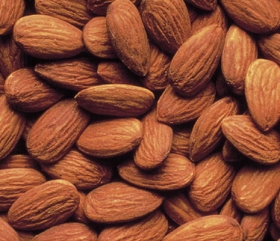
Almonds May Lower Risks of Type 2 Diabetes and Heart Disease

A new study from the University of Medicine and Dentistry of New Jersey suggests that an almond-enriched diet can improve insulin sensitivity and lower LDL-cholesterol levels for people with prediabetes.
read here

Friday, December 17, 2010

City Lights Affects Air Pollution

Excess light at night can contribute to air pollution, according to a study by scientists at the National Oceanic and Atmospheric Administration (NOAA) and the Cooperative Institute for Research in Environmental Sciences (CIRES) at the University of Colorado. Findings presented at the American Geophysical Union in San Francisco on Monday indicate that uplight from outdoor lighting that contributes to sky glow over cities also interferes with chemical reactions that naturally clean the air during nighttime hours.
read here

Tuesday, December 14, 2010

Type 1 Diabetes:Can you Grow Your Own Transplant?

Men with type 1 diabetes may be able to grow their own insulin-producing cells from their testicular tissue, say Georgetown University Medical Center (GUMC) researchers who presented their findings Dec. 12 at the American Society of Cell Biology 50th annual meeting in Philadelphia.
read here

Saturday, December 11, 2010

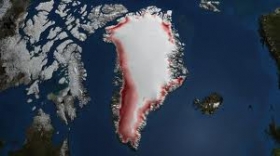
Greenland Ice Sheet Flow Driven by Short-Term Weather Extremes

The ice sheet consists of layers of compressed snow and covers roughly 80 per cent of the surface of Greenland. Since the 1990s, it has been documented to be losing approximately 100 billion tonnes of ice per year -- a process that most scientists agree is accelerating, but has been poorly understood. Some of the loss has been attributed to accelerated glacier flow towards ocean outlets.Now a new study, published in the journal Nature, shows that a steady meltwater supply from gradual warming may in fact slow down glacier flow, while sudden water input could cause glaciers to speed up and spread, resulting in increased melt....
read it here