Friday, December 31, 2010

Growing Atlantic dead zone shrinks habitat for Species

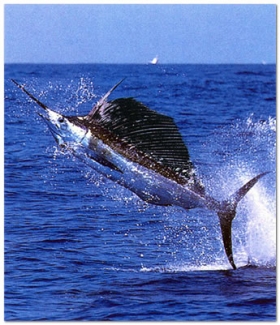
A dead zone off the coast of West Africa is reducing the amount of available habitat for Atlantic tuna and billfish species, reports the National Oceanic and Atmospheric Administration in a study published in Fisheries Oceanography. The zone is growing due to rising water temperatures and is expected to cause over-harvest of tuna and billfish as the fish seek higher levels of oxygen in areas with greater fisheries activity.
read here 

Thursday, December 30, 2010

NASA project for irrigation management

To support irrigation management decisions by agricultural producers, NASA has launched a project that uses the Terrestrial Observation and Prediction System (TOPS), a software application that processes imagery from Earth-observing satellites and delivers new sources of information to California growers.

TOPS combines data from NASA satellites, with local weather observations to provide information about crop water needs. The project is an example of NASA’s efforts to address needs outside the science community, such as water management in California and the western US.
read here 

Animal trafficking flourishes in Brazil

here

WORLD'S OLDEST HUMAN REMAINS?


Discovered in Israel, the finding challenges conventional wisdom that Homo sapiens originated in Africa.
read here 


Wednesday, December 29, 2010

Environmental Limit Species Diversity

 New research on lizards in the Caribbean demonstrates that species diversification is limited by the environment. The finding supports and extends the MacArthur-Wilson theory of island biogeography.

Tuesday, December 28, 2010

New species in Peru

Each year, a new bird is found and every four years a new mammal discovered in the Peruvian Amazon, a haven for biodiversity where conservation and danger often go hand in hand.Skip related content
Although Peru is known for its Andes mountain range, the Amazon actually covers 60 percent of the country's territory. It is a hotbed of bio-activity and is home to 25,000 species of plants -- 10 percent of the world's stock.
Thanks to the Amazon, Peru has the world's second-largest bird population (1,800 species) and is among the top five countries for mammals (515 species) and reptiles (418 species).
This year alone, scientists stumbled upon a previously unknown leech and a new type of mosquito.
The animal population has grown in recent years, namely adding a mini poison dart frog with a fire-red head and blue legs (Ranitomeya amazonica), a purple-throated Sunangel hummingbird (Heliangelus viola) and a "tyrannosaurus leech" with eight teeth (Tyrannobdella reina).
More than 1,200 new species of plants or animals have been discovered in 10 years in the Amazon, according to the Worldwide Fund for Nature. But paradoxically, the novel species are often discovered during the very activities that threaten the Amazon the most.Peru, home to one of the biggest forest lands -- 700,000 square kilometers (270,270 square miles) -- is also a magnet for resource extraction.
Gerard Herail of France's IRD research and development institute in Lima noted that "a mining or hydrocarbons firm is not innately destructive. The key is whether or not it is 'clean'," or uses cleaner methods and technologies.
More species are disappearing than are being discovered around the world, noted Ernesto Raez, who heads the Sustainable Development Center at Cayetano Heredia University in Lima.


Monday, December 27, 2010

Blizzard causes air travel havoc

The first widespread blizzard of the season slammed the northeastern United States on the heavily traveled Christmas weekend on Sunday, canceling more than 1,500 flights, shutting the Amtrak passenger rail and challenging motorists on icy roads. The Atlantic storm unleashed powerful winds as it moved up the coast, dumping a foot of sideways-blowing snow on some areas with more expected up to the morning commute on Monday. Massachusetts and Maine declared states of emergency with only essential workers asked to work in Boston.
read here 

Sunday, December 26, 2010

Undersea Quake caused small tsunami in south Pacific

An undersea earthquake on Saturday caused a minor tsunami in the South Pacific but islanders said there were no reports of large-scale fluctuations in sea level or of damage or injuries.
read here